The Perfect Mobile Game Exists — and It's About Slicing Fruit
Sometimes the greatest ideas are the simplest ones. While the gaming industry races toward photorealistic graphics, sprawling open worlds, and live-service ecosystems requiring hundreds of hours of commitment, there's a game from 2010 that asks you to do exactly one thing: swipe your finger across pieces of fruit. That's it. That's the whole game.
And it's absolutely, irresistibly brilliant.
Fruit Ninja, developed by Australian studio Halfbrick, launched in April 2010 and quickly became one of the defining games of the smartphone era. At its peak, it was installed on roughly one-third of all iPhones in the United States. Over a billion downloads later, it remains one of the most recognized mobile games ever created — a testament to the timeless appeal of doing one thing perfectly.
I recently revisited Fruit Ninja after a few years away, expecting the nostalgia to outweigh the actual experience. Instead, I spent two hours slicing watermelons and chasing high scores while my dinner got cold. Some games just have it.
Gameplay: One Mechanic, Infinite Satisfaction
The core of Fruit Ninja is almost embarrassingly simple to explain. Fruit flies up from the bottom of the screen. You swipe to slice it. Don't miss fruit, and don't hit bombs. That's the rulebook.
But within that simplicity lies a game feel that borders on the transcendent. The slice itself — the way your finger traces a glowing arc across the screen, the satisfying "thwack" as fruit separates into halves, the burst of juice and color that accompanies each cut — is one of mobile gaming's most perfect sensory experiences. It's the touchscreen equivalent of popping bubble wrap: a tiny, repeatable pleasure that never stops feeling good.
Halfbrick nailed the physics of the slice in a way that still feels satisfying over a decade later. The angle of your swipe determines the direction of the split. Fruits have realistic weight and trajectory — a heavy watermelon arcs differently than a light strawberry. The speed of your swipe affects the sound effect and visual feedback. These are subtle details, but they're the difference between a forgettable game and one that burrows into your muscle memory.
Classic Mode
The original mode, and still the purest test of your ninja reflexes. Three misses (fruit that falls unsliced) and you're done. Bombs end your run instantly. It's a survival mode at heart, where the tension slowly builds as fruit patterns become faster and more complex. Getting past 100 in Classic is a genuine accomplishment that requires sustained focus and precise swiping. My personal best sits at 127, and I'm unreasonably proud of it.
Arcade Mode
If Classic is a meditative exercise in precision, Arcade is a 60-second explosion of chaos. You have one minute to score as many points as possible, with no penalty for missed fruit. Special bananas extend your timer, bonus fruits multiply your score, and double and triple combos reward fast, sweeping swipes. Arcade mode rewards aggression and speed over caution, making it a completely different experience from Classic despite using the same core mechanic.
Zen Mode
No bombs, no misses — just 90 seconds of pure slicing. Zen mode is Fruit Ninja's playground, where you can experiment with techniques, chase combo chains, and enjoy the meditative rhythm of slicing without any stress. It sounds boring on paper, but there's something genuinely relaxing about it. After a stressful day, mindlessly slicing fruit while colorful juice splashes across the screen is oddly therapeutic.
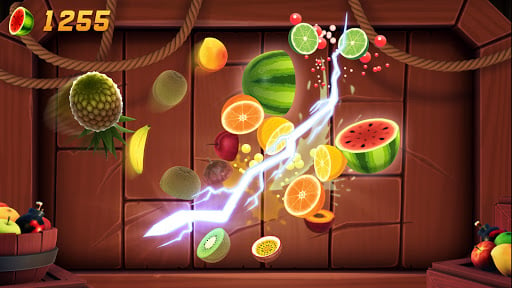
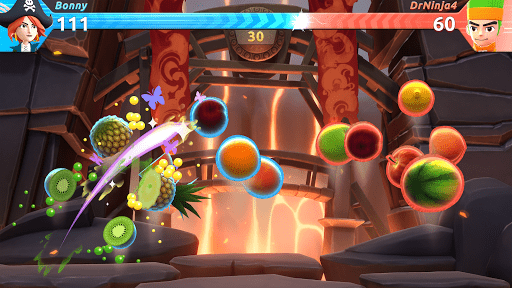
Arcade mode chaos and Classic mode precision — two sides of the same delicious coin
What Makes It Work: The Psychology of the Swipe
I've spent a lot of time thinking about why Fruit Ninja works so well, and I think it comes down to three psychological principles that Halfbrick either intentionally engineered or stumbled into brilliantly.
First, instant feedback. Every swipe produces immediate visual and audio results. There's zero gap between action and reaction. Your brain's reward system lights up with every slice, creating a dopamine loop that's both tiny and constant.
Second, flow state accessibility. Fruit Ninja requires just enough concentration to prevent boredom but not so much that it causes anxiety (at least in non-competitive play). This puts players squarely in the psychological "flow state" — that zone where you lose track of time because the challenge level perfectly matches your skill level.
Third, no friction. You open the game, you're slicing fruit in three seconds. No loading screens, no menus to navigate, no energy systems to wait out, no tutorials to skip. The path from "I want to play" to "I am playing" is as short as technologically possible. In an era when games like Angry Birds 2 or other free-to-play titles sometimes layer in waiting periods, Fruit Ninja's immediacy is genuinely refreshing.
Fun Fact
Halfbrick Studios is based in Brisbane, Australia. The idea for Fruit Ninja came during a brainstorming session where the team challenged themselves to come up with a game concept that could be explained in three seconds. The original prototype was built in just six weeks.
The Competitive Layer: Leaderboards and Events
While Fruit Ninja is perfectly enjoyable as a solo experience, the competitive element adds significant longevity. Global leaderboards for each mode create clear goals to chase, and there's something deeply motivating about climbing the rankings. The daily challenge system offers specific goals with unique modifiers — maybe you're slicing only pomegranates, or there are no bombs but triple the usual speed — that keep the experience varied.
Special events and seasonal content add temporary modes, themed fruits, and exclusive blades and backgrounds. These limited-time offerings create a reason to check in regularly and try something new, even if you've been playing for years.
If you enjoy the pick-up-and-play competitive nature of Fruit Ninja, you might also love Crossy Road — another game that proves simple mechanics can create endlessly replayable competitive experiences.
Blades, Dojos, and Customization
Fruit Ninja offers a surprisingly deep customization system through collectible blades and dojo backgrounds. Blades aren't just cosmetic — different blades leave different slash trails, have unique sound effects, and some even provide gameplay bonuses. The Starfruit Blade, for example, adds bonus points for certain fruit combinations, while the Flame Blade leaves a burning trail across the screen.
Dojos change the background environment where you slice, ranging from classic bamboo backgrounds to neon cyberpunk settings and fantasy landscapes. Collecting blades and dojos through gameplay achievements and events creates a secondary progression loop that gives completionists plenty to chase.
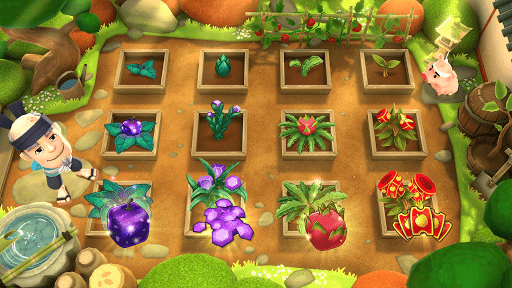
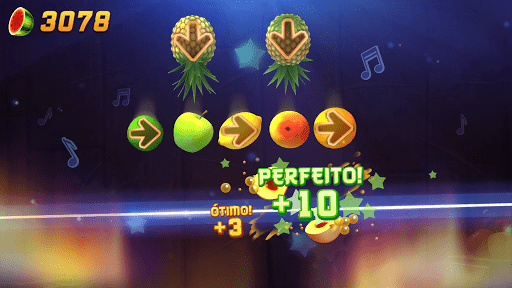

Customization options and the zen-like joy of endless fruit slicing
How It's Aged: A 2025 Perspective
Mobile gaming has changed dramatically since 2010. We've gone from simple touch games to games like Genshin Impact and PUBG Mobile that rival console experiences. So how does a simple fruit-slicing game hold up?
Surprisingly well, actually. Halfbrick has continued to update Fruit Ninja, modernizing the visuals, adding new modes and content, and refining the core experience. The graphics, while stylistically simple, are clean and vibrant on modern displays. The game runs flawlessly on current hardware, with zero lag or frame drops — something you'd hope for in a game this mechanically simple, but it's still worth noting.
What Fruit Ninja has going for it, fundamentally, is that its core mechanic is perfectly suited to touchscreens. This isn't a console game awkwardly ported to mobile with virtual buttons. Swiping to slice is the most natural touchscreen interaction imaginable — it was literally designed around the technology. That inherent fitness means it doesn't feel dated the way early mobile ports of traditional games do.
Where it shows its age is in monetization. The current version includes ads between sessions and in-app purchases for currency and blades. It's not aggressively monetized compared to many modern free-to-play games, but there are occasional ad interruptions that didn't exist in the original paid version. For a game this beloved, a "premium" ad-free option at a reasonable price point would be welcome.
What We Love
- One of the most satisfying core mechanics in all of mobile gaming
- Instantly accessible — no learning curve, no tutorials needed
- Multiple modes offer different experiences with the same great gameplay
- Perfect for short play sessions or extended score-chasing marathons
- Blade and dojo customization adds personality and goals
- Still looks and plays great on modern devices
What Could Improve
- Ad interruptions can break the flow between sessions
- Limited depth may not satisfy players seeking complex progression
- Multiplayer features feel underdeveloped compared to modern expectations
- Some premium blades feel priced too aggressively
Final Verdict: The Case for Simplicity
In an industry obsessed with more — more mechanics, more content, more engagement, more spending — Fruit Ninja is a beautiful argument for less. It does one thing, it does it perfectly, and it trusts that perfection to carry the experience. And it does. After fifteen years, swiping through a watermelon is still one of the most satisfying things you can do on a phone.
Fruit Ninja won't consume your life the way a sprawling RPG or competitive multiplayer game might. But it will be the game you reach for when you have three minutes to kill and want those three minutes to feel good. And honestly? That might be the highest compliment you can pay a mobile game.
For a similarly timeless and accessible experience, check out Subway Surfers — another game that proves you don't need complexity to create something enduringly fun.