Enter the Shadow Realm
Fighting games on mobile have always faced an identity crisis. Touch screens lack the tactile precision of arcade sticks and d-pads. Complex combo systems designed for 6-button controllers don't translate well to glass screens. And the competitive depth that fighting game communities demand seems almost incompatible with the casual-friendly expectations of mobile gaming. Against this backdrop, Nekki's Shadow Fight franchise emerged not just as a successful mobile fighter, but as a genuinely innovative one — a series that found its own language for touch-based combat and, in the process, built one of the most distinctive visual identities in gaming.
The journey from Shadow Fight 2's iconic black silhouettes to Shadow Fight 4: Arena's fully rendered 3D warriors tells the story of a studio constantly pushing boundaries while staying true to what made their games special in the first place: fluid, satisfying, skill-based combat that works beautifully on a phone screen.
The Evolution: From Shadow Fight 2 to Shadow Fight 4
Shadow Fight 2: The Silhouette Revolution
Shadow Fight 2 (2014) was a revelation. Instead of trying to render detailed character models on the modest hardware of the era, Nekki made a creative decision that became the franchise's signature: all fighters were rendered as black silhouettes against illuminated backgrounds. This wasn't a limitation — it was a masterstroke. The silhouette aesthetic was simultaneously atmospheric, unique, and technically efficient, allowing the animation team to focus entirely on movement quality rather than visual fidelity.
And the movement was superb. Shadow Fight 2's combat system used a virtual joystick and action buttons to deliver punches, kicks, and weapon attacks with a fluidity that no mobile fighter had achieved before. Combos felt natural. Timing mattered. Blocking and dodging rewarded patient, defensive play. The game proved that fighting games could work on mobile — they just needed to be designed differently from their console counterparts.
Shadow Fight 3: Into the Light
Shadow Fight 3 (2016) made the boldest creative leap in the franchise's history: it abandoned the silhouette aesthetic entirely. Characters were now fully rendered in 3D with detailed armor, weapons, and environmental lighting. The decision was controversial among longtime fans who loved the original art style, but the result was undeniably impressive. Shadow Fight 3 looked like nothing else on mobile — a console-quality fighter running on smartphones.
More importantly, Shadow Fight 3 deepened the combat system with the introduction of three fighting styles — Legion (power-based), Dynasty (speed-based), and Heralds (magic-based) — each with unique movesets, weapon types, and special abilities. The equipment system added RPG-like progression, with armor sets and weapons affecting both combat stats and visual appearance. It was a more complex game than its predecessor, and for many players, a more rewarding one.
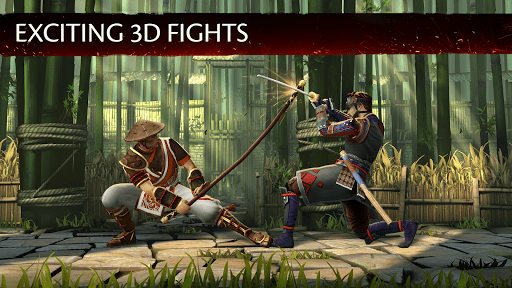
Shadow Fight 3 brought the franchise into full 3D with stunning visual detail
Shadow Fight 4: Arena — The Competitive Evolution
Shadow Fight 4: Arena represents the franchise's competitive future. Built around online PvP from the ground up, it streamlines the combat for real-time multiplayer while retaining the mechanical depth that makes Shadow Fight special. The character roster features unique fighters with individual movesets (rather than the equipment-driven customization of SF3), creating a more traditional fighting game structure with clearly defined matchups and strategies.
The arena format eliminates the single-player progression padding that slowed down previous entries, putting players directly into competitive matches. It's a leaner, more focused experience that prioritizes skill expression and player-vs-player competition. Whether this is better or worse than the story-driven approach of earlier games depends entirely on what you want from a mobile fighter.
Combat Mechanics: What Makes Shadow Fight Different
The Shadow Fight series has always distinguished itself through its approach to touch-based combat. While games like Mortal Kombat Mobile and Injustice rely heavily on tap-and-swipe simplified combat, Shadow Fight offers a closer-to-traditional fighting game experience with directional inputs, timing-based combos, and strategic spacing.
The Virtual Joystick Advantage
Unlike many mobile fighters that reduce combat to simple taps and swipes, Shadow Fight uses a virtual joystick that provides directional control over attacks. Forward + punch produces a different attack than back + punch. Low attacks, jumping attacks, and directional kicks all factor into the moveset, creating a vocabulary of attacks that approaches console fighter complexity. The system takes longer to learn than simpler touch combat, but the reward is a much richer competitive experience.
Weapons and Fighting Styles
Weapons are central to Shadow Fight's identity. From katanas to naginatas, from claws to giant hammers, each weapon type has its own reach, speed, and combo potential. Weapon selection creates a meta-game layer that adds strategic depth before the fight even begins. A fast, close-range dagger user plays a fundamentally different game than a long-range spear wielder, and understanding these matchups is essential for competitive play.
Technical Achievement
Shadow Fight 3 uses motion capture technology for its combat animations, with professional martial artists performing the moves that are then translated into in-game animations. This gives the combat a weight and authenticity that few mobile games match — every kick, every sword swing, every dodge feels grounded in real martial arts movement.
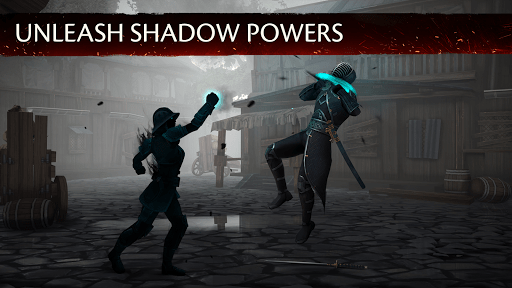
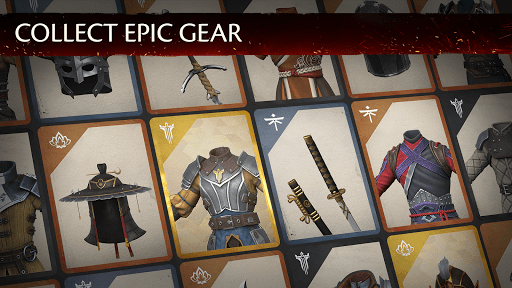
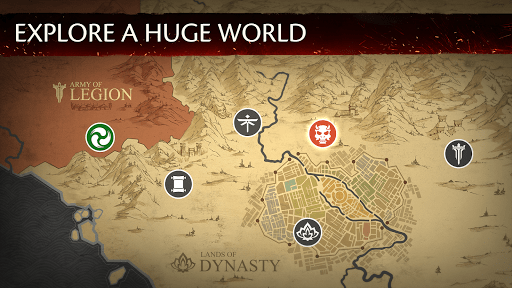
From weapon clashes to equipment builds — depth in every detail
Shadow Fight vs. Other Mobile Fighters
The mobile fighting game landscape is more populated than many gamers realize. Let's see how Shadow Fight stacks up against the competition.
vs. Mortal Kombat Mobile
Mortal Kombat Mobile brings the franchise's iconic characters and brutal fatalities to mobile, but its combat system is fundamentally different from Shadow Fight's. MK Mobile uses a card-collection system where you build teams of three fighters, and combat is simplified to taps, swipes, and timed special moves. It's more accessible but less mechanically deep. Shadow Fight rewards fighting game fundamentals — spacing, timing, reads — while MK Mobile rewards collection and team building. Both are excellent games, but they serve different audiences.
vs. Injustice 2 Mobile
Warner Bros' Injustice 2 Mobile follows a similar template to MK Mobile: card-based team building with simplified touch combat. The DC Universe roster is a major draw, and the graphics are impressive. But like MK Mobile, the actual fighting is less skill-expressive than Shadow Fight. You won't see the kind of player-skill differential in Injustice that you see in Shadow Fight, where a technically proficient player can dismantle an opponent with better equipment through superior fundamentals.
vs. Brawlhalla
Brawlhalla is the closest competitor in terms of skill-based combat on mobile. As a platform fighter in the Smash Bros tradition, Brawlhalla offers deep competitive mechanics and a thriving competitive scene. The combat philosophies differ significantly — Shadow Fight is a traditional 2D fighter emphasizing realistic martial arts, while Brawlhalla is a platform fighter with more cartoonish, aerial-focused combat. Players who enjoy the grounded, weapon-focused combat of Shadow Fight might find Brawlhalla too floaty, and vice versa.
The competitive spirit in Shadow Fight reminds me of the intensity you find in Brawl Stars, where individual skill can turn the tide of any match. Both games reward practice and game knowledge in ways that separate them from more casual mobile titles.
Visual Identity: The Art of Combat
Shadow Fight's visual evolution is one of the most dramatic in mobile gaming history. The original silhouette style — black figures against warm, glowing backgrounds — created an atmosphere that was simultaneously elegant and menacing. Fights looked like animated shadow puppetry, with the minimal visual information forcing players to read body language and animation cues rather than relying on visual noise.
The transition to full 3D in Shadow Fight 3 was a risky bet that paid off. The character models, environmental design, and lighting effects are genuinely impressive for mobile. Armor designs draw from a range of cultural influences — Japanese, Chinese, European medieval — creating a visually diverse world that feels both fantastical and grounded. The combat effects — sparks from weapon clashes, dust kicked up by footwork, the ethereal glow of shadow energy abilities — add visual excitement without obscuring the gameplay.
This attention to visual storytelling through combat animation is something you can also appreciate in Call of Duty Mobile, which similarly brings console-quality visuals to mobile screens. Both games demonstrate that mobile hardware is more than capable of delivering visually stunning combat experiences.
The Story Campaign: More Than Just Fights
Shadow Fight 3's story mode deserves special mention. Rather than the bare-minimum narrative that most mobile fighters offer, SF3 presents a genuinely interesting story about three factions — the technologically advanced Legion, the mystical Dynasty, and the secretive Heralds — vying for control of shadow energy. Your character navigates faction politics, makes choices that affect the narrative, and confronts boss characters with unique mechanics and backstories.
The story won't win literary awards, but it provides compelling context for the combat and gives players a reason to care about the world beyond just winning fights. Boss battles, in particular, are highlights — each one introduces unique mechanics that test your mastery of the combat system in creative ways.
Monetization and Progression
This is where Shadow Fight 3 draws its most legitimate criticism. The equipment system, while interesting in concept, creates progression walls where advancing requires either patience or spending. Matching against opponents with significantly better gear can feel unfair regardless of skill level. The gacha-style equipment acquisition adds randomness to progression that can be frustrating.
Shadow Fight 4: Arena addresses some of these concerns by moving to a character-based roster rather than equipment-driven customization, but introduces its own monetization through character unlocks and cosmetics. Neither approach is perfect, but the core combat remains satisfying regardless of spending — and for competitive players, the PvP arena mode in SF4 provides a more level playing field. The approach parallels what you'll see in games like Fortnite, where cosmetics drive revenue while the core gameplay remains accessible to all.
Final Verdict: A Fighting Legacy Worth Your Time
The Shadow Fight franchise stands as the most significant mobile-first fighting game series in gaming history. From the artistic brilliance of Shadow Fight 2's silhouettes to the visual spectacle of Shadow Fight 3's 3D combat to the competitive focus of Shadow Fight 4: Arena, Nekki has consistently pushed the boundaries of what fighting games can be on mobile devices.
If you're a fighting game fan who has dismissed mobile as a platform for the genre, Shadow Fight is the game that should change your mind. The combat is deep enough to reward dedicated practice, the visual presentation is stunning, and the franchise continues to evolve in exciting directions. Step into the arena. Your shadow is waiting.