The Birth of a Mobile Running Revolution
Temple Run 2 is the sequel to one of mobile gaming's most important titles. The original Temple Run, created by husband-and-wife team Keith Shepherd and Natalia Luckyanova of Imangi Studios, was a landmark moment for mobile gaming. It proved that a simple, free-to-play game from a tiny indie studio could compete with the biggest names in the industry. When Temple Run 2 launched in January 2013, it built upon everything that made the original great while introducing dramatic improvements that redefined the endless runner genre.
The premise remains irresistibly simple: you've stolen a cursed idol from a temple, and now you must run for your life as a demonic creature chases you through increasingly treacherous terrain. The camera sits behind your character as they sprint forward automatically, and you must swipe to turn, jump, and slide to avoid obstacles. One wrong move and you're caught. The question isn't whether you'll eventually fall — it's how far you can get before you do.
Improvements Over the Original
While the original Temple Run established the formula, Temple Run 2 refined it in every dimension. The graphics received a massive overhaul, moving from simple corridors to lush, detailed environments with depth and atmosphere. The path itself became more varied: instead of running along uniform stone walls, players now navigate cliff edges, zip lines, mine cart tracks, water slides, and crumbling bridges that add visual variety and gameplay depth.
The controls were tightened significantly, with more responsive swipe detection and smoother animations that make the game feel more precise and less frustrating. The addition of more varied obstacles, including rotating blades, gaps that require precise timing, and sections where the path itself tilts, added complexity without sacrificing the instant accessibility that made the original so popular.
Perhaps the most significant improvement was the environmental variety. The original game took place in a single temple setting. Temple Run 2 introduced multiple distinct environments, each with unique visual themes, obstacles, and challenges. This variety keeps runs feeling fresh and gives players visual milestones to look forward to as they push further into each run.
Environments: A World of Adventure
Temple Run 2's environments are one of its strongest features. Each setting offers a distinct visual identity and introduces unique gameplay elements that change how you approach your run.
- Sky Summit: The classic starting environment, featuring crumbling cliff-side paths, wooden bridges, and lush vegetation set against dramatic mountain backdrops. It serves as a tutorial of sorts, introducing basic obstacles in a visually stunning setting.
- Frozen Shadows: An icy environment with slippery surfaces, frozen waterfalls, and crystal caves. The cold, blue palette creates a stark contrast to other environments, and ice-themed obstacles add new timing challenges.
- Blazing Sands: A desert setting with sandstorms, ancient ruins, and heat-hazed horizons. Sand dunes and crumbling archways provide the obstacle framework, while the warm color palette creates an atmosphere of ancient mystery.
- Pirate Cove: A coastal environment featuring shipwrecks, treasure caves, and wave-swept bridges. The pirate theme adds playful visual elements and unique obstacles like cannon fire and collapsing masts.
Power-Ups: Your Tools for Survival
Power-ups play a crucial role in extending runs and maximizing scores. Each power-up can be upgraded multiple times using coins earned during gameplay, making the upgrade system a key long-term progression mechanic.
Shield
The Shield protects you from a single obstacle hit, allowing you to survive what would otherwise be a run-ending collision. At higher upgrade levels, the Shield lasts longer and can absorb multiple hits, making it invaluable during difficult sections. Learning to rely on the Shield without wasting it on easy obstacles is a key skill for high-score runs.
Coin Magnet
The Coin Magnet attracts all nearby coins to your character, eliminating the need to precisely position yourself to collect them. This power-up is especially valuable in sections with coins placed in hard-to-reach positions, and upgrading it extends its duration significantly.
Boost
The Boost launches you forward at extreme speed, making you temporarily invulnerable to obstacles. During a Boost, coins are collected automatically and the score multiplier increases rapidly. The trade-off is that the Boost ends abruptly, sometimes depositing you into a challenging section with little reaction time.
Score Multiplier
While not a pick-up during runs, the Score Multiplier is a persistent upgrade that increases the rate at which your score accumulates. Maxing out the Score Multiplier is essential for competitive high scores and represents the most impactful long-term investment of coins.
Imangi Studios Success
Temple Run 2 was downloaded over 50 million times in its first two weeks — a record at the time. The Temple Run franchise has collectively been downloaded over 1 billion times, making it one of the most successful indie game series in history.
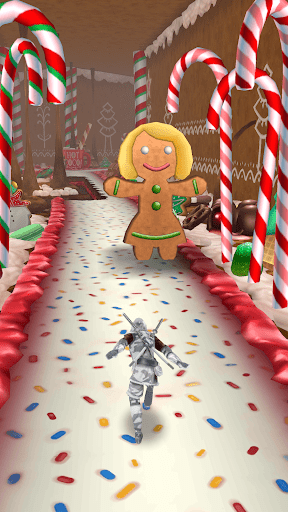
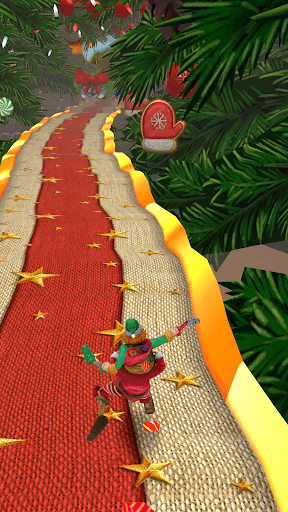
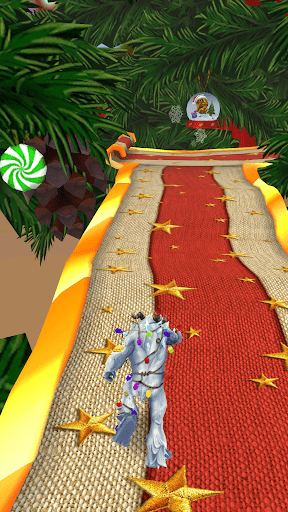
Gameplay screenshots
Characters and Customization
Temple Run 2 features a growing roster of unlockable characters, each with unique appearances and, in some cases, special abilities. Guy Dangerous, the original explorer, remains the default character, but players can unlock characters like Scarlett Fox, Barry Bones, Karma Lee, and seasonal special characters through coin purchases or special events.
Character skins and outfits add additional customization options, allowing players to personalize their running experience. While characters are primarily cosmetic, the variety encourages collection and gives players goals beyond simple score chasing.
Mine Cart Sequences and Special Sections
Some of Temple Run 2's most thrilling moments come during special gameplay sections that break from the standard running format. Mine cart sequences place you in a fast-moving cart on rails, requiring you to tilt your device to steer and swipe to avoid obstacles. These sections are both exciting and challenging, as the reduced control compared to on-foot running creates a heightened sense of danger.
Zip lines offer brief moments of aerial traversal where you slide down cables, collecting airborne coins and timing your release to land safely. Water slides send you cascading down twisting chutes, adding another vehicle mode to the gameplay variety. These special sections prevent the game from feeling repetitive and provide memorable moments that keep players coming back.
Special Objectives and Achievements
Beyond high scores, Temple Run 2 offers a system of special objectives that provide structured goals and rewards. These objectives range from simple tasks (collect a certain number of coins in a single run) to complex challenges (travel a specific distance without collecting any power-ups). Completing objectives fills a progress bar that increases your permanent score multiplier, creating a compelling meta-progression system.
The achievement system gives long-term players milestones to pursue (lifetime distance records, total coins collected, power-up usage statistics) that track their journey from beginner to expert. We think it's worth mentioning that these persistent goals ensure that every run contributes to larger progress, even when individual runs end in early failure.
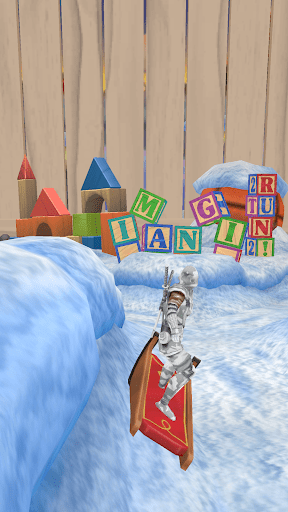
In-game action
A Timeless Mobile Classic
In our honest assessment, Temple Run 2 endures because it captures something fundamental about what makes mobile gaming great: instant accessibility, compelling moment-to-moment gameplay, and a "just one more run" loop that respects players' time while rewarding their skill. Imangi Studios' creation is a reminder that in mobile gaming, polish and playability matter more than complexity, and that a perfectly executed simple idea can captivate hundreds of millions of players worldwide.