That One Week in July 2016
I need to tell you about the strangest, most beautiful thing I ever saw a video game do. It was July 2016. I walked out of my apartment and the park across the street — a park I'd passed a thousand times without thinking twice — was full of people. Not just a few. Dozens. All of them holding their phones, all of them walking in the same directions, all of them smiling. Strangers were talking to each other. Actual, real-life conversations between people who had never met. "There's a Dratini by the fountain." "Has anyone found a Snorlax?" "Team Mystic, right?"
Pokémon GO didn't just launch. It erupted. Within a week of its July 6, 2016 release, it had more daily active users than Twitter. It was generating more revenue per day than any app in history. Parks that had been quiet for years were suddenly packed at midnight with people hunting Pokémon. The game was on every news channel, in every conversation, crossing every demographic boundary that gaming had ever drawn. Your grandmother knew what Pokémon GO was. Your boss was playing it in the parking lot.
Nothing like it had happened before. And honestly, nothing quite like it has happened since.
The Idea That Seemed Impossible
Pokémon GO was born from the unlikely marriage of two things: Niantic's expertise in augmented reality (built through their earlier game Ingress, which mapped real-world locations into a sci-fi portal game) and The Pokémon Company's beloved franchise of collectible creatures. The concept was so simple it sounded like a joke: what if Pokémon were in the real world, and you had to physically walk to find them?
The technical reality was ambitious. Niantic used their Ingress database of real-world points of interest to place PokéStops and Gyms at landmarks, parks, public art, and notable locations worldwide. GPS tracking turned your actual walking distance into in-game progress. The AR camera — rudimentary by today's standards — overlaid Pokémon onto your phone's camera feed, creating the illusion that a Pidgey was sitting on your kitchen table or a Magikarp was flopping in a parking lot.
It shouldn't have worked this well. But something about the combination — the nostalgia of Pokémon, the novelty of AR, the simple joy of walking and discovering — created magic. Pure, undiluted, once-in-a-generation magic.
My Summer of Walking
I'm going to get personal here because Pokémon GO's story, for me, isn't really about the game. It's about the people I played it with.
My friend group in 2016 had drifted into that phase of adulthood where we'd text memes to each other but rarely actually hung out. Jobs, schedules, the comfortable inertia of routine. Pokémon GO changed that overnight. Suddenly we had a group chat dedicated to raid coordination. Saturday afternoons became "Community Day walks" — three hours of wandering through the city, catching Pokémon, and actually talking face-to-face. We discovered parks we'd never visited. We found a coffee shop four blocks from my apartment that I didn't know existed because we were chasing a rare spawn.
I'm not exaggerating when I say Pokémon GO repaired friendships that had been fading. It gave us a reason to be together that wasn't "let's get dinner," which always felt like an obligation, but "let's walk around and catch stuff," which felt like an adventure. Ten years later, those walks are some of my favorite memories.
The Neighborhood I Finally Knew
Here's something that surprises people when I tell them: Pokémon GO made me know my own city. I'd lived in the same neighborhood for three years before the game launched, and I walked the same two routes — to the grocery store and to the subway. Pokémon GO forced me off those routes. That mural two streets over? That's a PokéStop. The historic church I'd never noticed? A gym. The waterfront trail I'd always meant to explore? An absolute Magikarp farming goldmine.
This experience — rediscovering your own environment through the lens of a game — is something no other game has ever replicated at this scale. Not Minecraft's procedural worlds, not Genshin Impact's breathtaking Teyvat. Pokémon GO's world is your world, and that makes it more personal than any fictional landscape could be.
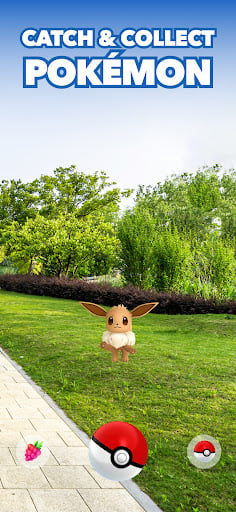
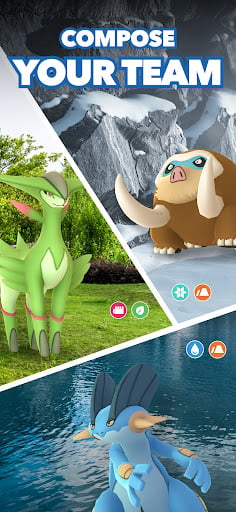
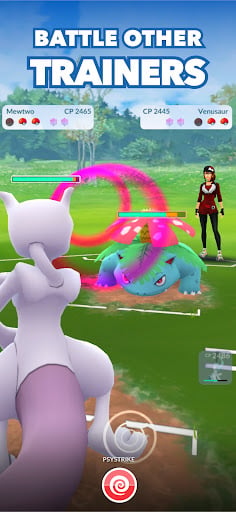
From AR encounters to legendary raids — every walk is a potential adventure
The Crash, the Recovery, and the Rebuild
Let's be honest about what happened after that glorious summer. Pokémon GO's player base crashed. Hard. The initial frenzy was unsustainable — nothing could maintain that level of cultural saturation. By the end of 2016, the headlines shifted from "Pokémon GO takes over the world" to "Is Pokémon GO dead?" The narrative, as internet narratives tend to be, was simplistic and wrong.
Yes, the casual wave receded. But what remained was a dedicated, passionate community of tens of millions of players who genuinely loved the game. And Niantic, to their immense credit, kept building. The features that were missing at launch — trading, PvP battles, friend lists, weather effects, hundreds of additional Pokémon — arrived steadily over the following years. Each major update brought back lapsed players and gave current players reasons to keep walking.
Raids: The Feature That Built Communities
The introduction of Raid Battles in 2017 was Pokémon GO's second revolution. Powerful Pokémon — Legendaries that couldn't be caught in the wild — appeared at gyms, and defeating them required groups of players cooperating in real-time, in person. Suddenly, standing outside a library with fifteen strangers coordinating a Mewtwo raid wasn't weird — it was Wednesday.
Raids created community infrastructure that didn't exist before. Discord servers, WhatsApp groups, and Facebook groups sprang up in cities worldwide, dedicated to coordinating raids and sharing information. These communities persist to this day, and many have evolved beyond the game itself into genuine friend groups.
Pokémon GO by the Numbers (2026)
• Over 1 billion total downloads worldwide
• $8+ billion in lifetime revenue
• All 9 generations of Pokémon represented
• Players have collectively walked over 60 billion kilometers
• Community Day events average 30+ million participants globally
• Active in 150+ countries and territories
Community Day: Gaming's Best Monthly Tradition
If I had to pick one feature that best represents what Pokémon GO does right, it's Community Day. Once a month, for a few hours, a specific Pokémon spawns everywhere with an exclusive move and boosted shiny rates. Parks fill with players. Local businesses near popular play areas see increased traffic. Niantic often partners with local organizations for cleanup events or charity tie-ins.
Community Day isn't just a gameplay event — it's a social one. It's the one day a month when the Pokémon GO community physically gathers, and the atmosphere is genuinely heartwarming. I've seen kids teaching their grandparents how to throw curve balls. I've seen competitive players helping newcomers understand IV stats. I've seen people bring cookies for their local raid group. It's wholesome in a way that gaming rarely is.
The Game in 2026: What Keeps Players Walking
Pokémon GO in 2026 is unrecognizable compared to the 2016 version. The feature set has expanded enormously:
- GO Battle League: A structured PvP system with seasonal rankings, rewards, and a surprisingly deep metagame
- Routes: Player-created walking paths that others can follow, discovering Pokémon and items along the way
- Party Play: Real-time cooperative play features that reward groups for playing together
- Shadow and Purified Pokémon: Team GO Rocket content with a persistent storyline
- Mega Evolutions and Primal Forms: Temporary power-ups that add strategic depth to raids
- Showcases: Competitive displays at PokéStops where trainers can show off their best catches
The depth available to dedicated players is remarkable. IV optimization, PvP team building, shiny hunting, lucky friend coordination, raid challenge runs — there's enough complexity to satisfy hardcore gamers while the core "walk and catch" loop remains accessible to anyone.
Every walk is a chance to discover something new in the world of Pokémon GO
The Health Factor Nobody Expected
I want to mention something that doesn't come up enough in game reviews: Pokémon GO is genuinely good for your health. Multiple peer-reviewed studies have found that regular Pokémon GO players increase their daily step counts significantly. The Adventure Sync feature, which tracks walking even when the app is closed, rewards players with eggs and buddy candy for hitting distance milestones. The game literally incentivizes exercise.
For me personally, Pokémon GO turned walking from "something I should do more of" to "something I actively want to do." There's a hatch coming at 5km. There's a research task to walk 3km with my buddy. The nearest gym has a raid starting in ten minutes and it's a twenty-minute walk. These tiny nudges, accumulated over years, have made me a person who walks 8,000 to 10,000 steps a day instead of the 3,000 I was averaging before.
No other mobile game can claim this kind of real-world health impact. Games like Roblox and Genshin Impact deliver incredible digital experiences, but Pokémon GO delivers physical ones too. It's the game that gets you off the couch, and in an era of increasing screen time, that's not a small thing.
Who Should Play Pokémon GO in 2026?
Pokémon GO is for anyone who walks. That's not a flippant answer — it's the honest truth. If you walk to work, walk your dog, walk for exercise, walk to think, Pokémon GO transforms those walks from routine into adventure. You don't need to be a Pokémon fan (though nostalgia helps). You don't need gaming experience. You just need comfortable shoes and a willingness to look at the world a little differently.
It's especially good for:
- Parents looking for a reason to explore with their kids
- Friend groups who want a shared activity that isn't sitting at a restaurant
- People who want to gamify exercise without a fitness app's clinical feel
- Pokémon fans who never outgrew the dream of catching them in the real world
- Anyone who's curious about what their neighborhood is hiding in plain sight
A Love Letter to Walking
Pokémon GO isn't the most technically impressive mobile game. It's not the most graphically beautiful. It's not the most strategically deep. What it is, uniquely and irreplaceably, is the game that makes the real world more interesting. It's the game that gives you a reason to take the long way home, to explore that street you've never turned down, to say "hey, want to go for a walk?" to a friend you haven't seen in weeks.
I've been playing for almost ten years now. My Pokédex isn't complete. My PvP ranking is average. I missed more Community Days than I care to admit. But I've walked thousands of kilometers I wouldn't have walked otherwise. I've had hundreds of conversations with strangers I wouldn't have talked to. I've discovered corners of my city I wouldn't have found. And I've shared all of it with friends, old and new, who also thought they were "just catching Pokémon" but were really building something more lasting than any in-game achievement.
That's Pokémon GO's real legacy. Not the revenue numbers, not the download records, not even the cultural phenomenon of summer 2016. It's the walks. It's always been the walks.