A World That Changed Everything
When HoYoverse (then miHoYo) launched Genshin Impact on September 28, 2020, the mobile gaming industry collectively raised an eyebrow. A free-to-play open-world action RPG with console-quality visuals, a fully orchestrated soundtrack, and a world so vast it rivaled The Legend of Zelda: Breath of the Wild? On a phone? The skepticism was palpable. And then people actually played it.
Within two weeks, Genshin Impact had earned over $100 million in mobile revenue alone. Within a year, it crossed the $1 billion mark faster than any mobile game in history. But more than the revenue numbers — which are staggering — what makes Genshin Impact truly remarkable is that it delivered on a promise the mobile gaming industry had been making and breaking for a decade: genuine AAA gaming quality in the palm of your hand.
I remember downloading it during the first week of launch, expecting a polished but ultimately shallow gacha game. What I got instead was something that consumed hundreds of hours of my life. And here we are in 2026, and I'm still exploring Teyvat.
The Genesis: From Honkai to Teyvat
To understand Genshin Impact, you need to understand miHoYo. Founded in 2012 by three Shanghai university students — Cai Haoyu, Liu Wei, and Luo Yuhao — the studio cut its teeth on the Honkai series, a franchise of action games featuring anime-styled characters fighting cosmic threats. Honkai Impact 3rd, released in 2016, was already a technical marvel on mobile, demonstrating that miHoYo could deliver fluid, responsive action combat on touchscreens. But Honkai was fundamentally a linear, mission-based game. Genshin Impact was the studio's audacious leap into open-world territory.
Development reportedly involved a team of over 400 people and a budget exceeding $100 million — figures unheard of for a mobile-first title. The early "Breath of the Wild clone" comparisons were inevitable and not entirely unfair. Genshin borrows liberally from Nintendo's masterpiece: the stamina-based climbing, the gliding, the cooking system, the emphasis on exploration over waypoint chasing. But miHoYo layered its own identity over that foundation, creating something that quickly grew beyond any single comparison.
The Elemental Combat Revolution
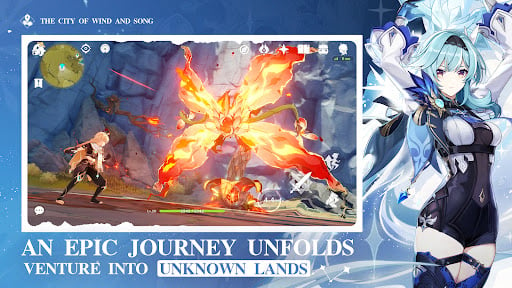
Where Genshin Impact truly distinguished itself from day one was its Elemental Reaction system. Seven elements — Pyro, Hydro, Electro, Cryo, Anemo, Geo, and Dendro — interact with each other in logical, satisfying ways. Apply Hydro to an enemy, then hit them with Cryo, and they freeze solid. Combine Pyro and Electro for an Overloaded explosion. These aren't just damage multipliers; they're the core language of Genshin's combat, creating a system where team composition and ability sequencing matter more than raw character power.
The genius of this system is that it rewards creativity. Sure, there are "meta" team compositions that min-maxers optimize endlessly. But a player who understands elemental interactions can tackle virtually any content with their favorite characters, regardless of rarity. I've seen players clear the game's hardest challenges with starter characters that the tier lists dismiss. That's the mark of a well-designed combat system.
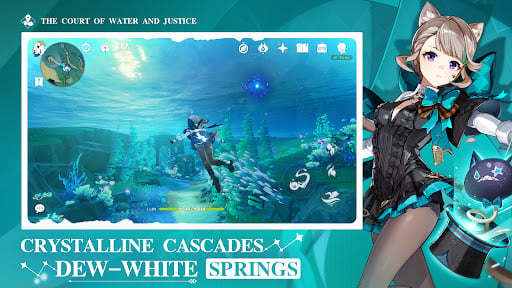
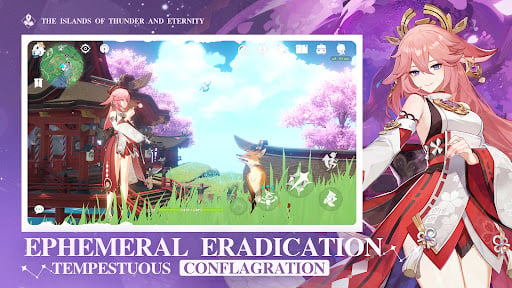
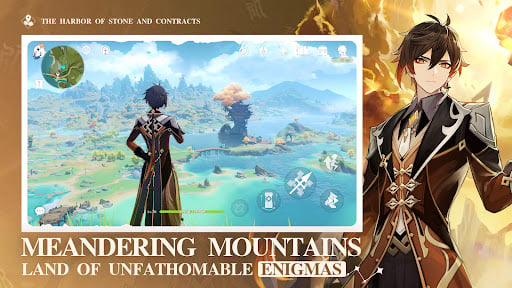
From explosive combat to breathtaking exploration — Teyvat never stops surprising
The World of Teyvat: A Living, Breathing Map
Teyvat is not just big — it's dense. Every hill, every cave, every cluster of trees hides something: a puzzle, a chest, a hidden quest, a lore fragment, an environmental story told entirely through object placement. HoYoverse's world design philosophy prioritizes discovery over direction, and it shows. You can open the map intending to complete one objective and emerge three hours later having done twelve other things, all of which felt organic and rewarding.
Mondstadt: Where It All Begins
The City of Freedom is Genshin's tutorial region, but calling it "just a tutorial" does it a disservice. European-inspired architecture, rolling green hills, a lake reflecting a castle straight out of a fairy tale. Mondstadt teaches you the game's fundamentals while making you fall in love with the world. The Stormterror's Lair sequence — where you literally fight a dragon mid-flight — remains one of gaming's most memorable early-game setpieces.
Liyue: Scale and Splendor
Liyue is where Genshin Impact announces its ambition. Inspired by Chinese geography and culture, this region expands the game dramatically. Towering mountain ranges, misty wetlands, an impossibly beautiful harbor city built on ancient stone formations. The Archon Quest here, involving the "death" of the region's god and the political intrigue that follows, elevated Genshin's storytelling from competent to genuinely compelling.
Inazuma, Sumeru, Fontaine, and Beyond
Each subsequent region has pushed boundaries further. Inazuma, inspired by Japan's Edo period, introduced an archipelago of islands separated by raging storms, with a central conflict about a god stripping her people's ambitions. Sumeru blended Middle Eastern and South Asian aesthetics with a narrative about dreams, memory, and academic corruption. Fontaine, the nation of justice, delivered what many (myself included) consider the game's strongest story arc yet, with a courtroom drama that would make Ace Attorney proud.
The sheer variety of environments keeps exploration consistently exciting. You're never traversing the same type of terrain for too long. One moment you're climbing desert dunes, the next you're diving underwater in an Art Nouveau-inspired city. It's this relentless creativity that keeps players coming back version after version.
By the Numbers: Genshin Impact in 2026
• Over 65 million monthly active players worldwide
• 7 fully explorable nations, each with unique mechanics
• 80+ playable characters across all elements
• Orchestral soundtrack spanning 500+ tracks recorded in studios across London, Tokyo, and Shanghai
• Available on mobile, PC, PlayStation, and Nintendo Switch
The Gacha Question: Monetization Under the Microscope
No honest discussion of Genshin Impact can avoid its gacha system. Characters and weapons are primarily obtained through "Wishes" — a randomized pull system funded by premium currency. The base rates are low (0.6% for a 5-star character), though a pity system guarantees a 5-star within 90 pulls. A "50/50" system means you have a coin flip's chance of getting the featured character versus an off-banner one.
Is it expensive? It can be, absolutely. Players who want every new character at release can spend hundreds of dollars per banner. But here's the nuance that tier-list obsessed discourse often misses: Genshin Impact is entirely clearable with free characters. The Spiral Abyss, the game's hardest repeating content, has been conquered with free-to-play rosters by skilled players since version 1.0. If you compare the gacha model to something like the cosmetic systems in Fortnite, the difference is that Genshin's pulls affect gameplay — but the skill ceiling is high enough that player ability matters more than character rarity.
HoYoverse has also gradually become more generous over time. Primo gem income from events, exploration, and maintenance compensation has steadily increased. The Chronicled Wish system, introduced later, allows players to select specific characters they want to target. It's not a perfect system, but it's evolving in the right direction.
How Genshin Compares to the Competition
Genshin Impact essentially created its own subgenre: the "open-world gacha RPG." Games like Tower of Fantasy and Wuthering Waves have followed in its wake, but none have matched the breadth and polish of the original. The closest comparison might be Pokémon GO in terms of cultural impact — both games transcended the gaming community and became genuine mainstream phenomena.
Within HoYoverse's own ecosystem, Honkai: Star Rail has carved out its own impressive niche with turn-based combat and a more focused narrative structure. But Genshin's open-world freedom remains unique in its scope and execution.
What other free-to-play titles — like Roblox or Fortnite — have achieved through social features and user-generated content, Genshin achieves through handcrafted world design and narrative investment. It's a fundamentally different approach to player retention, and it's proven remarkably effective.
Fontaine's underwater city — one of gaming's most breathtaking environments
The Soundtrack: A Masterclass in Game Music
I genuinely believe Genshin Impact has one of the finest video game soundtracks ever composed. Composer Yu-Peng Chen and the HOYO-MiX team have created a body of work that spans traditional Chinese instruments, Japanese taiko drums, Middle Eastern oud, French accordion, full symphonic orchestras, and more — each region's musical identity reflecting its cultural inspirations with astonishing authenticity.
Liyue's theme, with its guzheng and erhu, evokes misty mountains and ancient tales. Inazuma's percussion-heavy score captures the tension of a nation in civil war. Fontaine's waltzes and accordions transport you to a Parisian dreamscape. The boss battle themes are genuinely pulse-pounding, and the exploration music is so relaxing that I've caught myself leaving the game running just to listen to it. This isn't background music — it's art.
Playing Genshin Impact in 2026: Is It Too Late to Start?
This is the question I hear most often, and the answer is an emphatic no. If anything, 2026 is one of the best times to start playing. Here's why:
- Massive content library: New players have hundreds of hours of quests, exploration, and story content waiting for them, all accessible for free.
- Quality of life improvements: Years of updates have streamlined progression, improved the new player experience, and added shortcuts that didn't exist at launch.
- Generous catch-up mechanics: Events and systems designed to help newer players reach endgame faster without feeling overwhelmed.
- The story is reaching its climax: With the final nations on the horizon, starting now means you'll experience the narrative conclusion in real-time with the community.
The only legitimate downside to starting late is FOMO — some limited-time events and character banners won't return immediately. But HoYoverse has implemented rerun systems and archival content to mitigate this. The core game has only gotten better with age.
Community and Cultural Impact
Genshin Impact's community is one of the most creatively prolific in gaming. Fan art, cosplay, music covers, lore analysis videos, and fan fiction flood social media daily. HoYoverse has fostered this by investing heavily in official community events, art contests, and fan creation showcases. The annual HoYoFEST events bring players together in real-world locations across dozens of countries.
The game has also had a measurable impact on tourism. Visits to locations that inspired in-game regions — from Guilin's karst formations (Liyue) to Fontainebleau Palace (Fontaine) — have reportedly increased following the game's release. That's cultural influence that extends far beyond the screen.
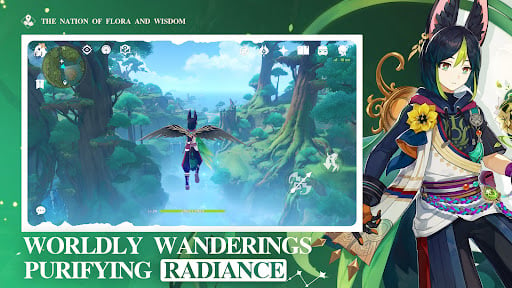
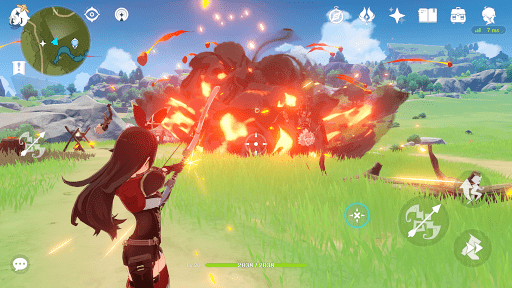
The attention to visual detail in every corner of Teyvat is nothing short of obsessive
The Road Ahead: Genshin's Future
With Natlan and Snezhnaya still on the roadmap, and the overarching story of the Traveler and their lost sibling building toward a climax, Genshin Impact's best chapters may still be ahead. HoYoverse has committed to a long-term development plan, and the consistent quality of each major update suggests they have the resources and talent to deliver on that promise.
Beyond content, technical improvements continue. Better optimization for lower-end devices, graphical enhancements for high-end hardware, and expanded multiplayer features are all on the horizon. The game that launched in 2020 and the game that exists in 2026 are almost different products in terms of scope, polish, and content volume.
Final Verdict: A Once-in-a-Generation Achievement
Genshin Impact is not perfect. The resin (stamina) system remains frustrating. Some story quests are dialogue-heavy to a fault. The gacha can sting if luck isn't on your side. But stepping back and looking at the full picture — the world, the music, the combat, the constant stream of free content, the sheer scale of the artistic vision — it's hard to conclude anything other than this: Genshin Impact is one of the most important games of the 2020s, period.
Whether you're a mobile gaming veteran or someone who's never taken a phone game seriously, Genshin Impact deserves your attention. It's a game that respects your time, rewards your curiosity, and consistently surprises with its ambition. In a free-to-play landscape filled with games designed to extract money with minimal effort, Genshin Impact is the rare title that earns every penny it makes by being genuinely, undeniably great.