The Original Battle Royale Goes Mobile
Before battle royale became a genre so saturated that every other game stapled it on as a mode, there was PlayerUnknown's Battlegrounds. The PC game that took a mod concept from ARMA and DayZ and turned it into a global obsession. When PUBG Mobile launched in March 2018, developed by Tencent's Lightspeed & Quantum Studio in partnership with KRAFTON, the question wasn't whether a battle royale could work on mobile — Fortnite was already proving that — but whether the specific, grittier feel of PUBG could translate to a touchscreen without losing its identity.
The answer, somewhat remarkably, was yes. PUBG Mobile captured the tense, methodical gameplay of its PC parent while making concessions smart enough to work on phones without feeling like a compromise. Seven years later, with over a billion downloads and one of mobile gaming's most robust competitive ecosystems, PUBG Mobile has earned its place as the definitive realistic battle royale experience on mobile.
PUBG Mobile vs. Fortnite vs. Free Fire: The Battle Royale Trinity
The mobile battle royale market essentially revolves around three titans, and understanding PUBG Mobile means understanding how it differentiates itself from Fortnite and Free Fire. These aren't just competing games — they're competing philosophies about what a battle royale should be.
Realism vs. Spectacle: PUBG Mobile vs. Fortnite
Fortnite is a kaleidoscope. It's building mechanics, licensed crossovers, zero-gravity zones, and Snoop Dogg parachuting onto an island while dancing. It's brilliant at what it does, but what it does is fundamentally different from PUBG Mobile. Where Fortnite leans into arcadey absurdity, PUBG Mobile commits to grounded, realistic combat. Bullet physics include travel time and drop. Vehicle handling has weight and consequence. The gunplay — the actual moment-to-moment feel of firing a weapon — is heavier, more deliberate, and more satisfying for players who want their shooters to feel like shooters.
Map design reflects this divide too. Fortnite's island is a constantly evolving playground of wacky themed locations. PUBG Mobile's Erangel is a military-realist landscape of abandoned cities, wheat fields, and industrial complexes. Both are excellent; they're just serving different appetites. If you want a tactical shooting experience, PUBG Mobile wins. If you want a social, creative free-for-all, Fortnite has the edge.
Scale vs. Accessibility: PUBG Mobile vs. Free Fire
Free Fire took the opposite approach from PUBG: smaller maps, faster matches, lower device requirements, and a lighter, more accessible feel. It's been enormously successful, particularly in Southeast Asia and Latin America, because it runs on phones that can't handle PUBG Mobile's heavier graphical demands. But that accessibility comes with trade-offs. Free Fire's gunplay is simpler, its maps less complex, and its strategic depth shallower. PUBG Mobile offers a fuller, more nuanced experience — but demands more from both the player and the hardware.
The honest comparison is this: Free Fire is the mobile battle royale you play casually in quick bursts. PUBG Mobile is the one you invest in, learn, and improve at over months and years. Neither is objectively "better" — they serve different players — but if you're reading a deep comparison article, you're probably the kind of person who'd prefer PUBG Mobile's depth.
Head-to-Head Comparison
Match Length: PUBG Mobile ~25 min | Fortnite ~20 min | Free Fire ~10 min
Players per Match: PUBG Mobile 100 | Fortnite 100 | Free Fire 50
Map Size: PUBG Mobile 8x8 km (Erangel) | Fortnite ~5x5 km | Free Fire ~2x2 km
Device Requirements: PUBG Mobile Medium-High | Fortnite High | Free Fire Low
Combat Style: PUBG Mobile Realistic | Fortnite Arcadey | Free Fire Simplified
Maps That Tell Stories
PUBG Mobile's map roster has expanded considerably since launch, and each map offers a distinct tactical experience that changes how you approach every match.
Erangel: The Birthplace
The original 8x8 km map remains the gold standard. A post-Soviet landscape of abandoned military bases, coastal towns, and rolling countryside. Erangel's genius is in its pacing — the map is large enough that the early game is about looting and positioning, the mid game is about rotations and zone management, and the late game is about close-quarters firefights in increasingly desperate circles. After thousands of matches, I still find new angles, new rotations, and new hiding spots. That's map design longevity.
Miramar: The Desert Gauntlet
Miramar splits opinions, and honestly, I love that about it. The desert map is harsh, exposed, and punishing of poor positioning. Long-range engagements dominate because cover is scarce. Snipers thrive here. If Erangel is PUBG at its most balanced, Miramar is PUBG at its most demanding — and for skilled players, its most rewarding.
Sanhok and Livik: Speed and Intensity
The smaller maps — 4x4 km Sanhok and 2x2 km Livik — were PUBG Mobile's answer to the faster-paced competition. These maps compress the battle royale experience into tighter spaces and shorter timeframes. They're excellent for quick sessions and for players who prefer constant action over strategic pacing. They're also great warm-up maps before diving into a serious Erangel ranked session.

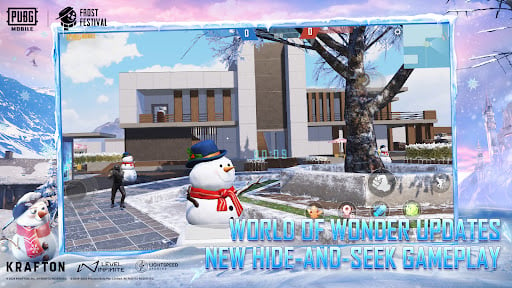
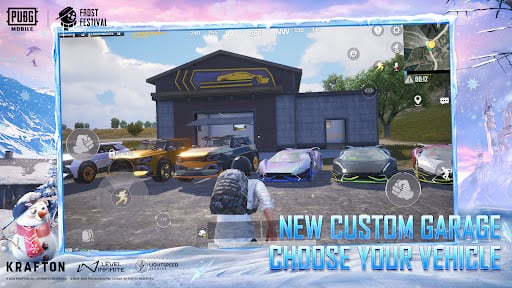
From desert sniping to urban firefights — PUBG Mobile's maps offer tactical diversity
Gunplay and Mechanics: Where PUBG Mobile Shines
Let's talk about what PUBG Mobile does better than any other mobile shooter: the guns. Every weapon has distinct recoil patterns, firing rates, damage profiles, and attachment compatibilities. The M416 feels different from the SCAR-L, which feels different from the AKM, not just in stats but in the tactile feedback of firing. Mastering recoil control — learning to pull down and compensate for horizontal drift — is a skill that separates casual players from serious competitors.
The attachment system adds another layer of depth. Extended magazines, compensators, vertical grips, scopes — the loot you find directly impacts your combat effectiveness, and smart looting decisions can give you an edge before you ever fire a shot. Knowing when to take a 4x scope over a red dot, or when a suppressor is more valuable than a compensator, is game knowledge that matters.
Vehicle combat, too, is something PUBG Mobile handles exceptionally well. Cars, boats, and motorcycles aren't just transport — they're tactical tools. Using a vehicle as rolling cover, performing drive-by attacks on exposed squads, or simply making a desperate zone rotation in the back of a UAZ under fire are experiences unique to PUBG's vehicle physics.
The Competitive Ecosystem
PUBG Mobile's esports scene, anchored by the PUBG Mobile Global Championship (PMGC) and regional Pro Leagues, has become one of mobile gaming's most lucrative competitive circuits. The PMGC Grand Finals have featured prize pools exceeding $3 million, attracting teams from every continent. The competitive format emphasizes consistency across multiple matches rather than single-game heroics, rewarding teams that can place well repeatedly rather than those who get lucky once.
For non-professional players, the ranked system provides a structured competitive experience. Pushing from Bronze to Conqueror (the top 500 players on each server) is a genuine achievement that requires hundreds of hours of strategic play. The tier system works — it consistently matches you against players of similar skill, and climbing ranks feels earned rather than arbitrary.
Erangel remains one of the best-designed battle royale maps ever created
Updates and Evolution
Tencent has kept PUBG Mobile remarkably fresh through consistent content updates. New modes like Infection (zombies), Payload (heavy weapons), and Arena (team deathmatch) provide variety beyond the core battle royale experience. Themed events tied to collaborations with properties like Godzilla, Dragon Ball, and Lamborghini add temporary excitement without altering the core game. Seasonal updates bring map refreshes, weapon balancing, and new Royale Pass content that gives free and paying players progression goals.
The game has also evolved technically. PUBG Mobile in 2026 runs smoother, looks better, and loads faster than the 2018 version. Support for 90fps and 120fps on compatible devices has transformed the experience for players with modern hardware, and optimization for older devices has improved too. Compared to the early days when frame drops during firefights were common, the current version is remarkably stable.
Who Should Play PUBG Mobile?
PUBG Mobile is the right choice if you want a battle royale that respects tactical play. If you enjoy games like Call of Duty Mobile for their gunplay but want the strategic depth of a full battle royale experience, PUBG Mobile is your game. If you've played the PC version and want a mobile experience that doesn't feel dumbed down, this is it.
It's less ideal if you want quick, casual sessions (try Free Fire instead) or if you prefer a lighter, more creative experience (Fortnite's your bet). But for the player who wants to learn, improve, and compete in a mobile shooter with genuine depth, PUBG Mobile remains the benchmark in 2026.
The Bottom Line
PUBG Mobile isn't the flashiest mobile game. It doesn't have Fortnite's cultural omnipresence or Free Fire's accessibility. What it has is substance. Deep, rewarding gunplay. Maps that reward knowledge. A competitive ecosystem that takes mobile gaming seriously. And a commitment to the kind of tactical, tension-driven gameplay that made battle royale compelling in the first place. If that sounds like your kind of game, PUBG Mobile won't disappoint.