The HoYoverse Evolution: From Action to Strategy
When HoYoverse (formerly miHoYo) launched Genshin Impact in 2020, they fundamentally altered the mobile gaming landscape. An open-world action RPG with AAA production values, free-to-play accessibility, and genuinely compelling exploration — it was a paradigm shift. So when the studio announced Honkai: Star Rail, a turn-based RPG set in the broader Honkai universe, the gaming community had one collective question: could HoYoverse capture that same magic in a completely different genre?
After spending considerable time with Star Rail since its April 2023 launch — following the main story across multiple worlds, building teams, navigating the gacha, and losing hours to its surprisingly addictive side content — I can say the answer is a resounding yes. But it's a different kind of magic. Where Genshin Impact thrills through exploration and real-time combat, Star Rail captivates through narrative depth, strategic team building, and some of the most polished turn-based combat I've experienced on any platform.
This isn't just another gacha game with pretty characters. This is a full-blown science fiction epic that happens to be free on your phone.
The Narrative Architecture
Honkai: Star Rail's story follows the Trailblazer — a customizable protagonist awakened aboard a space station under attack — as they join the Astral Express, a cosmic train that travels between worlds. The premise sounds like standard anime fare, but the execution is anything but standard. Each world the Express visits presents a self-contained narrative arc that explores complex themes through the lens of science fiction.
The first major story arc, set on the frozen planet Jarilo-VI, deals with class division, authoritarian governance, and the cost of survival. The second, on the celestial ship Xianzhou Luofu, examines immortality, cultural stagnation, and the weight of tradition. These aren't afterthought storylines used to justify dungeon-crawling; they're genuinely well-written narratives with memorable characters, moral ambiguity, and emotional payoffs that rival dedicated visual novels.
What elevates the storytelling further is the tonal range. Star Rail can shift from laugh-out-loud comedy — the game has a remarkably irreverent sense of humor, with fourth-wall breaks and absurdist gags — to genuinely moving dramatic moments without it feeling jarring. The character Kafka's introduction, Blade's tragic backstory, Jingliu's quiet devastation — these are moments that stick with you. HoYoverse has assembled a writing team that understands pacing, subtext, and emotional resonance in ways that most mobile games never attempt.
Side Content That Respects Your Intelligence
Beyond the main story, Star Rail is filled with companion quests, hidden stories, and lore fragments that reward curious players. The companion quest system allows you to spend time with specific characters, learning their backstories and motivations through interactive storylines that often rival the main narrative in quality. These quests aren't just fetch-quest padding — they contain genuine character development and frequently offer choices that affect how scenes play out.
Turn-Based Combat: Classical Roots, Modern Execution
The combat system is where Star Rail makes its most decisive departure from Genshin Impact. Instead of real-time action combat, Star Rail employs a turn-based system built around elemental weaknesses, turn manipulation, and team synergy. If you've played classic JRPGs — think Final Fantasy or Persona — the foundational concepts will feel immediately familiar. But HoYoverse has layered enough innovation on top to make the system feel distinctly its own.
Each character has a basic attack, a skill (which costs Skill Points, a shared resource), an ultimate ability (charged through dealing and receiving damage), and a talent (a passive effect). The interplay between these abilities across a four-character team creates intricate strategic puzzles. Do you spend Skill Points aggressively on your DPS character to maximize damage, or conserve them for your support to keep the team alive through the next turn?
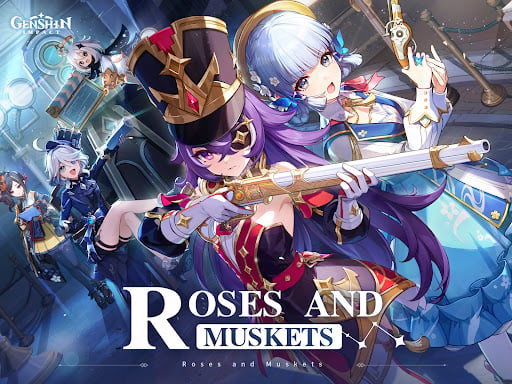
HoYoverse's signature visual flair brings every battle to life
The Weakness Break System
Central to Star Rail's combat is the Weakness system. Every enemy has specific elemental weaknesses, displayed as icons above their heads. Hitting these weaknesses depletes a Toughness bar; when the bar empties, the enemy is "Broken," taking bonus damage and suffering a debilitating effect based on the element used. Fire causes a damage-over-time burn, Ice freezes the enemy for a turn, Lightning shocks them to delay their next action, and so on.
This system creates a constant strategic consideration during team building. You need to bring characters whose elements match the enemies you'll face, which prevents any single team from being optimal in all situations. It's an elegant solution to the "build one team and never change it" problem that plagues many RPGs, and it gives every character in your roster potential relevance.
Paths: The Character Archetype System
Characters in Star Rail follow "Paths" — archetypes that define their role in combat. The Destruction path focuses on dealing high damage. The Hunt path specializes in single-target elimination. Erudition excels at area-of-effect attacks. Harmony buffs allies. Nihility debuffs enemies. Preservation provides shields and damage mitigation. Abundance heals. Each path has distinct strategic value, and understanding how they interact is key to building effective teams.
Deep Dive: Skill Point Economy
The shared Skill Point system is Star Rail's most underrated design innovation. Your team shares a pool of Skill Points (max 5), and every skill used depletes this pool while basic attacks restore it. This creates a fascinating economic puzzle: hyper-aggressive teams burn through SP quickly and collapse, while overly conservative teams waste damage potential. The best teams balance SP generation and consumption elegantly, creating a rhythm to combat that feels deeply satisfying to master.
Art Direction and Visual Design
HoYoverse's art teams are among the best in the industry, and Star Rail showcases their talents across a range of aesthetic styles. Each world has a distinct visual identity: Jarilo-VI channels Soviet-era brutalism mixed with fantasy architecture, Xianzhou Luofu draws from classical Chinese aesthetics with floating palaces and celestial gardens, and Penacony evokes Art Deco glamour through a dreamlike casino world.
Character designs are, predictably, outstanding. Each character has a visually distinctive silhouette, detailed costume design, and expressive animation work. Ultimate ability animations are particularly spectacular — cinematic sequences that showcase each character's personality while delivering flashy, impactful visuals. They never get old, even after seeing them hundreds of times, because each one tells a tiny story about who that character is.
The comparison to Monument Valley might seem absurd given the genre differences, but both games share a commitment to using visual design as storytelling. Every environment in Star Rail isn't just beautiful — it communicates narrative information about the world and its inhabitants.
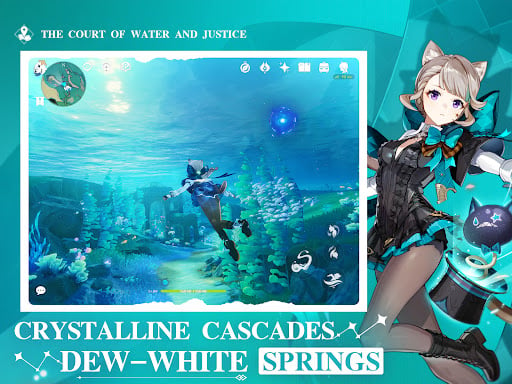
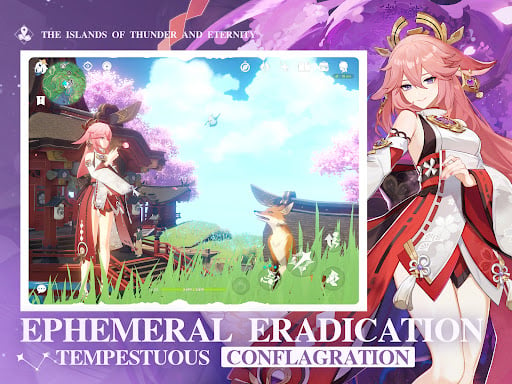
Star Rail's worlds range from frozen tundra to celestial palaces
The Gacha System: The Necessary Conversation
No discussion of Honkai: Star Rail would be complete without addressing its gacha monetization — the controversial loot-box-style system through which players acquire new characters and equipment (Light Cones). Like Genshin Impact, Star Rail uses a "Warp" system where players spend premium currency for random pulls, with a pity system guaranteeing a 5-star character or Light Cone within a set number of pulls.
The hard pity for a 5-star character is 90 pulls, with a "soft pity" increasing rates around pull 75. There's also a 50/50 system: when you pull a 5-star character, there's a 50% chance it's the featured banner character and a 50% chance it's a standard character. If you lose the 50/50, your next 5-star is guaranteed to be the featured character.
Is it predatory? That depends on your perspective and your relationship with spending money on games. What I can say is that Star Rail is remarkably generous with free currency compared to most gacha games. Through story content, events, daily rewards, and HoYoverse's frequent promotional giveaways, free-to-play players can realistically save enough for a guaranteed featured character every two to three patches. The game's difficulty is also balanced around 4-star characters, meaning you absolutely do not need 5-star characters to clear all content.
Endgame: Memory of Chaos and Beyond
Star Rail's endgame revolves around Memory of Chaos (later expanded into additional modes like Pure Fiction and Apocalyptic Shadow), a multi-stage challenge dungeon that resets bi-weekly. These challenges demand deep roster investment, strategic flexibility, and thorough understanding of team-building theory. They're genuinely difficult, and completing the highest tiers requires careful planning and execution.
The Simulated Universe is another substantial endgame offering — a roguelike mode where you build a temporary character through random buff selections (called Blessings) across multiple combat encounters. It's compelling in its own right, offering a different kind of strategic engagement where you adapt your approach based on what buffs the game offers you.
Where Star Rail Stumbles
Despite my enthusiasm, Star Rail isn't without flaws. The stamina system (Trailblaze Power) limits daily farming sessions, which can feel restrictive when you're eager to build new characters. The exploration, while beautiful, is more linear and corridor-based compared to Genshin's open world — some players find it limiting. And the gacha system, however generous by genre standards, remains a gacha system with all the psychological design that implies.
Loading times on mobile devices can also be substantial, and the game's storage requirements are considerable and growing with each update. If you're primarily a mobile player, you'll need a capable device with plenty of free storage.
Final Thoughts: A New Standard for Mobile RPGs
Honkai: Star Rail is that rare game that transcends its platform. It's a mobile game that doesn't feel like a mobile game, a gacha game that succeeds despite its monetization rather than because of it, and a turn-based RPG that stands proudly alongside console classics in the genre. The writing is exceptional, the combat is strategically deep, the art direction is world-class, and the sheer volume of high-quality content available for free is staggering.
If you've been curious about HoYoverse games but found Genshin Impact's action combat or open-world scope intimidating, Star Rail might be your perfect entry point. Its structure is more focused, its combat is more deliberate, and its story-driven progression means you always have a clear purpose. And if you're already a fan of turn-based RPGs, this is simply one of the best the genre has ever produced on any platform.
For players who enjoy exploration and discovery, Pokémon GO offers a completely different approach to RPG adventuring — one that gets you outside into the real world rather than across the cosmos. Both games, in their own ways, redefine what mobile RPGs can be.